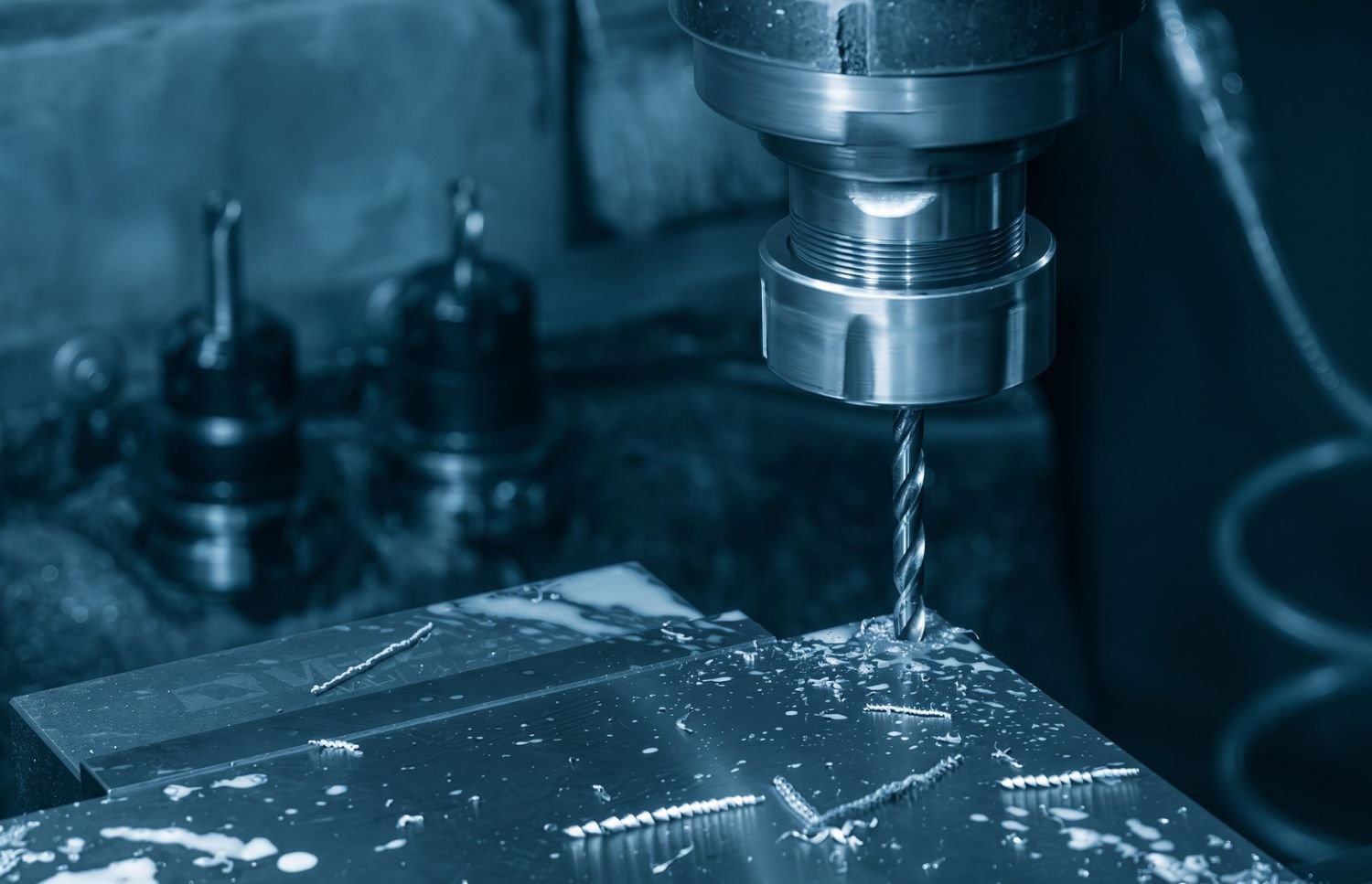
Drilling, tapping, and reaming each place different demands on cutting tools and workpieces. The right lubricant helps manage heat, friction, chip movement, and tool wear. Choosing lubricants according to the operation can also improve finish quality and machining consistency.
Each process calls for lubrication characteristics suited to its specific cutting demands. Understanding those differences helps machinists choose fluids that fit the job. Material, tooling, hole depth, and required finish all influence the right choice.
How Lubrication Needs Differ Across Machining Operations
Drilling removes material through rotating cutting edges that generate heat and produce chips. Tapping forms internal threads, creating sustained contact between cutting edges and workpiece surfaces. Reaming refines an existing hole, where finish and dimensional accuracy become more important.
Drilling places particular emphasis on heat control and efficient chip evacuation. Tapping needs strong boundary lubricity because thread formation creates considerable friction along cutting edges. US research on tapping loads found that dry sliding friction can run about four times higher than friction under cutting fluid lubrication. Reaming benefits from stable lubrication that keeps cutting smooth without affecting finished dimensions.
Material characteristics can also change the demands placed on each operation. Aluminum, stainless steel, titanium, and other metals can behave differently during cutting. A lubricant suited to the material helps address those differences without treating every job alike.
Choosing Lubricants for Drilling and Tapping
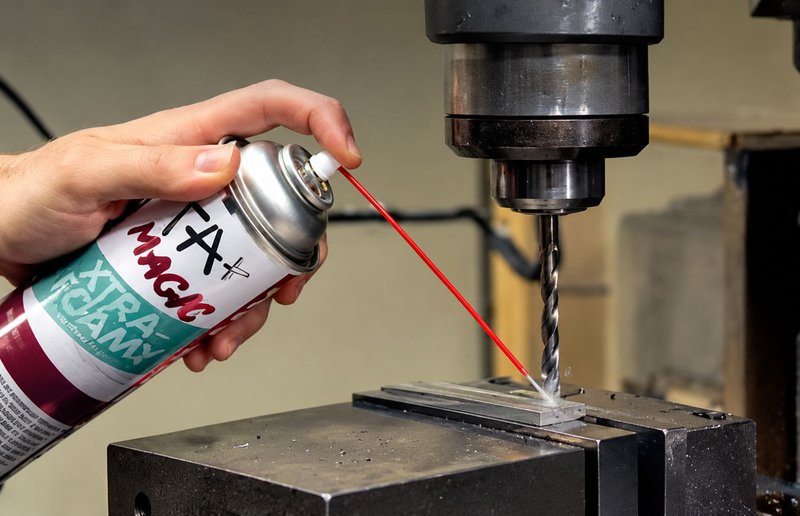
Drilling performance can suffer when heat and chips build around the cutting zone. Lubrication helps reduce friction while allowing chips to move through the tool's flutes. Those concerns become more noticeable during deeper holes or demanding material combinations.
A drilling lubricant should reach the cutting edge throughout the machining operation. Clinging properties can matter when fluid needs to remain with the tool. Consider these factors when matching a drilling lubricant to the application:
- Hole depth: Deeper holes can require stronger chip evacuation and lubricant coverage.
- Workpiece material: Different metals can create varying levels of heat and cutting resistance.
- Tool geometry: Flute design affects how easily chips leave the cutting area.
- Application method: Fluid delivery should place lubricant where cutting contact actually occurs.
- Cutting demands: Heavier cuts may require greater lubrication than lighter drilling operations.
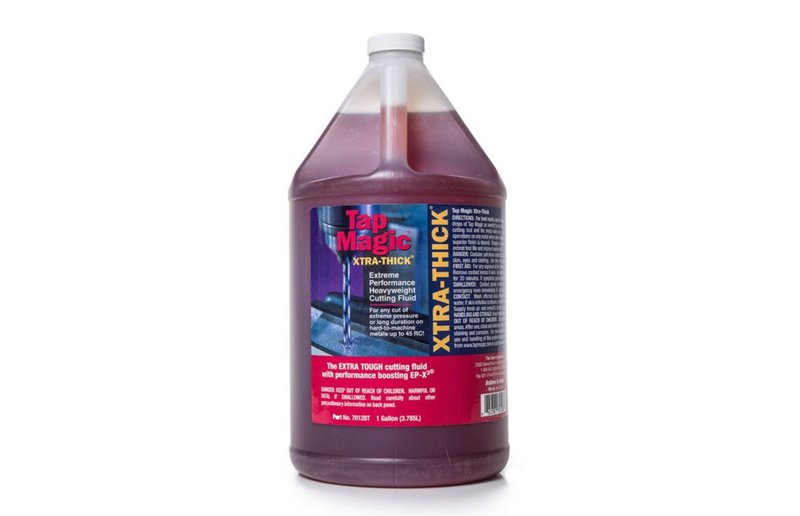
Material-specific formulations can help address finish, precision, and cutting behavior together. Tap Magic Xtra-Thick, for example, is designed for deep-hole cuts and demanding, hard metals. The right drilling lubricant can give operators better control over demanding hole-making work.
Why Tapping Requires Strong Lubrication
Tapping creates threads rather than simply removing material from a drilled hole. Each cutting edge engages the workpiece while chips must clear through limited space. Friction can quickly become a problem when lubrication does not match the application.
A suitable tapping lubricant should provide strong lubricity at the cutting interface. Good coverage helps the tap move through material with less resistance. The result can be cleaner threads and less stress on the cutting tool.
Material hardness and thread dimensions also affect lubricant requirements during tapping operations. Harder metals can demand greater protection against heat and cutting pressure. Tap Magic EP-Xtra is designed for demanding cuts across ferrous metals, including stainless steel.
Selecting Lubrication for Reaming and Hole Quality
Reaming removes a smaller amount of material while refining an existing hole. The process depends on controlled cutting to achieve the required size and finish. Lubrication helps keep the reamer moving smoothly through the prepared opening.
A suitable fluid can also help protect cutting edges during repeated reaming work. Excessive friction may affect tool condition and finished-hole consistency during production. Stable lubrication gives operators better conditions for maintaining predictable machining results.
Reaming applications may also call for different fluid formats than manual cutting jobs. Tap Magic H2OX is designed for grinding, sawing, milling, boring, and reaming hard metals. Its semi-synthetic formulation combines lubricity with reduced residue compared with heavier oil products.
What to Consider When Choosing a Machining Lubricant
The best lubricant depends on more than the name of the machining operation. Material, tooling, cutting conditions, hole depth, and finish requirements all influence selection. Application method matters too, particularly when fluid must reach difficult cutting areas.
Product formulation can also matter when shop conditions create additional fluid requirements. Water-based options may suit operations where cleanup and fluid handling remain important considerations. Use the following factors when comparing lubricant options for specific machining work:
- Metal compatibility: Match the lubricant to the material being drilled, tapped, or reamed.
- Required finish: Consider whether the finished part demands a smoother surface or tighter control.
- Tool protection: Look for lubrication suited to the cutting forces and tooling involved.
- Fluid format: Consider whether an oil, coolant, or water-based option fits the operation.
- Shop conditions: Account for application, cleanup, handling, and the demands of production.
NIOSH notes that metalworking fluids reduce heat and friction and remove metal particles during machining. It also recognizes a wide range of formulations, from straight oils to water-based fluids. That variety gives shops r
Choose Lubrication for Consistent Machining Performance
Drilling, tapping, and reaming each require lubrication suited to their distinct cutting demands. Drilling benefits from heat control and chip evacuation, particularly during deeper holes. Tapping depends heavily on lubricity for controlled thread formation and reduced cutting resistance.
At Tap Magic, cutting fluids are engineered around different metals and machining applications. Reaming calls for stable cutting conditions that protect finish and dimensional accuracy. For help matching lubrication to your application, connect with the Tap Magic team today.